Property Titles & Mortgage Due Diligence
Cross-Lease Property NZ Mortgage: Flats Plans, Defective Titles & Bank Rules
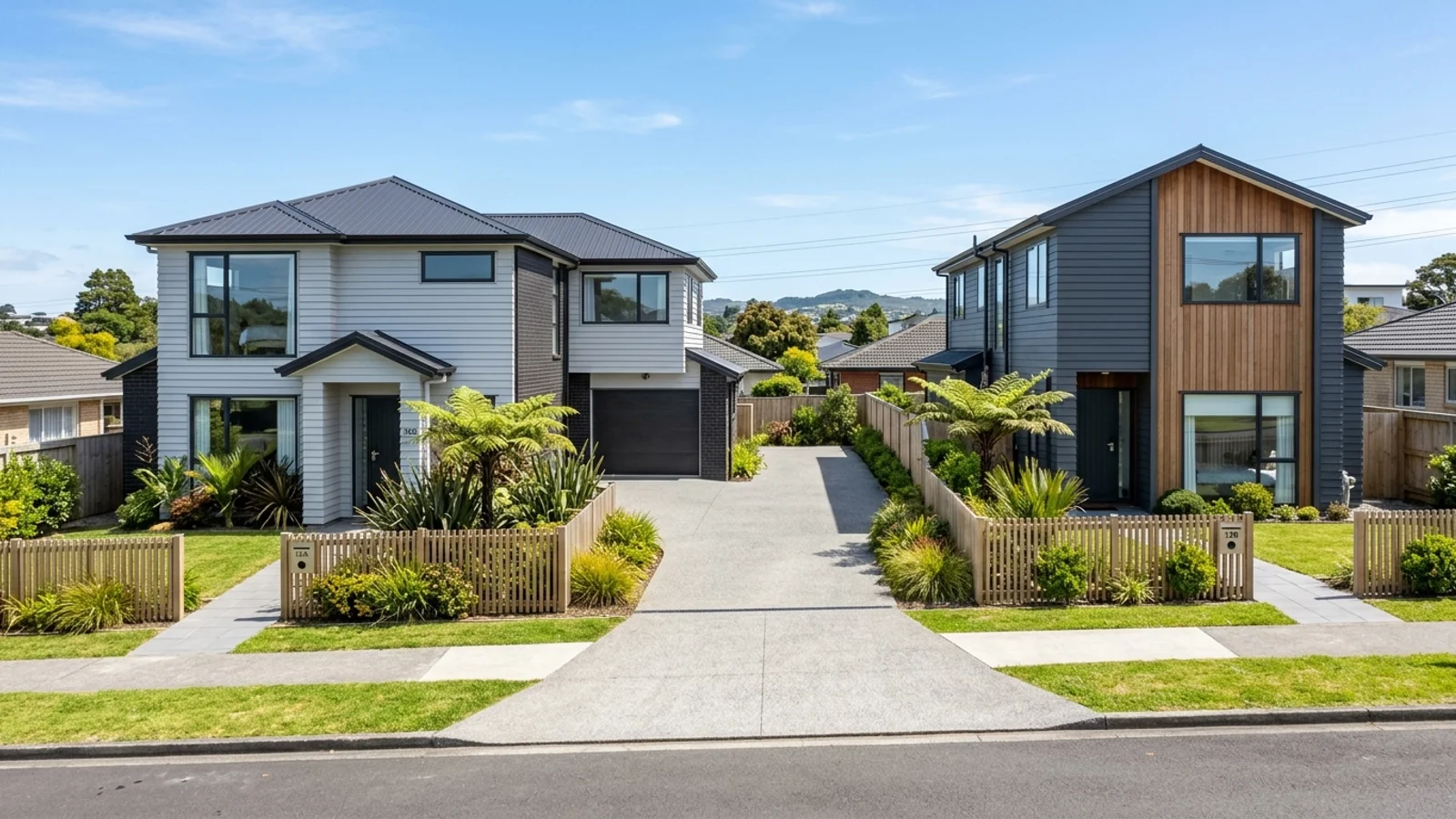
Buying a cross-lease property in New Zealand is the closest thing residential real estate has to a compulsory group project — you own your home, you share the lawn with your neighbour, and if someone built an unconsented conservatory back in 1994, the bank treats it like everyone failed the assignment.
The straight answer: securing a mortgage on a cross-lease property in NZ is completely straightforward when the title is clean. However, if a past owner added an extension, enclosed a porch, or built a carport without updating the registered "flats plan", the title is legally defective.
When a bank's legal team spots a flats plan mismatch, loan approvals grind to a sudden halt. Understanding how cross-lease titles work comes down to three non-negotiable realities:
- You Don't Solely Own the Land: You own an undivided share in the whole parcel of land, alongside a 999-year lease for your specific dwelling footprint.
- The Flats Plan Is Law: Any enclosed addition outside the surveyed outline on your title document creates a legal defect that compromises bank security.
- Neighbour Consent Is King: You cannot renovate, alter an exterior wall, or fix a defective plan without the written consent of your cross-lease neighbours.
Here is how cross-lease mortgages work in New Zealand, why banks decline defective titles, what alterations trigger red flags, and how to protect yourself before going unconditional.
1. What Is a Cross-Lease Title in NZ (and Why Do Over 200,000 Exist)?
If you have spent any time browsing property listings in Auckland, Hamilton, Tauranga, or Wellington, you have almost certainly encountered the term "Cross-Lease (Fee Simple)".
Between the late 1960s and 1991, Kiwi property owners and developers used cross-leasing as a legal loophole to bypass local council subdivision rules. Full fee-simple subdivisions required heavy infrastructure reserve contributions, council development levies, and strict minimum section sizes. Cross-leasing avoided all of that.
When you purchase a cross-lease property, your legal ownership consists of two intertwined parts registered with Land Information New Zealand (LINZ):
Part One
Undivided Freehold Share
You own an undivided fractional share (such as 1/2 or 1/3) of the entire parent section alongside your neighbours as tenants in common.
Part Two
999-Year Leasehold
All co-owners lease back to you the exclusive right to occupy your specific building footprint ("Flat 1") and yard for 999 years at a nominal peppercorn rent.
Because all owners co-own the underlying dirt, the cross-lease document creates a collective legal relationship. You cannot treat the boundary line like a private kingdom: the exterior outline of your dwelling is locked into the registered lease plan forever, unless every neighbour formally agrees to change it.
2. Cross-Lease vs Freehold vs Unit Title: Comparison Table
Understanding how a cross-lease differs from a standard freehold home or an apartment unit title helps clarify why banks scrutinise the paperwork so closely:
| Feature | Freehold (Fee Simple) | Cross-Lease | Unit Title |
|---|---|---|---|
| Land Ownership | You own 100% of the land inside boundary pegs | Shared undivided fraction of parent parcel | Shared common property managed by Body Corporate |
| Neighbour Consent for Renovations | No — council building consent only | Yes — mandatory for any structural or footprint change | Yes — Body Corporate committee approval required |
| Flats Plan Requirement | None — surveyed boundary pegs define property | Strict — building must match title diagram exactly | Unit plan defines internal unit boundaries |
| Body Corporate & Fees | None | None (informal shared costs for shared driveway) | Formal Body Corporate with annual levies |
| Bank Lending Appetite | Highest — standard 80%–90% LVR criteria | High if clean; zero if defective title | Strict rules on floor size (>40m²) and LTMF funds |
While cross-lease properties often trade at a modest discount compared to equivalent freehold homes (frequently 5% to 10% less in major urban markets), that saving disappears fast if you inherit a title headache that halts your mortgage drawdown.
3. What Makes a Cross-Lease Title "Defective" in the Eyes of a Bank?
Attached to every cross-lease Certificate of Title is a surveyed architectural drawing known as the Flats Plan (or "deposited plan"). This diagram shows the exact external perimeter of Flat 1, Flat 2, and any designated accessory buildings (such as Garages or Carports).
A cross-lease title becomes legally defective the moment the physical reality on the ground does not match the surveyed outline on the registered flats plan.
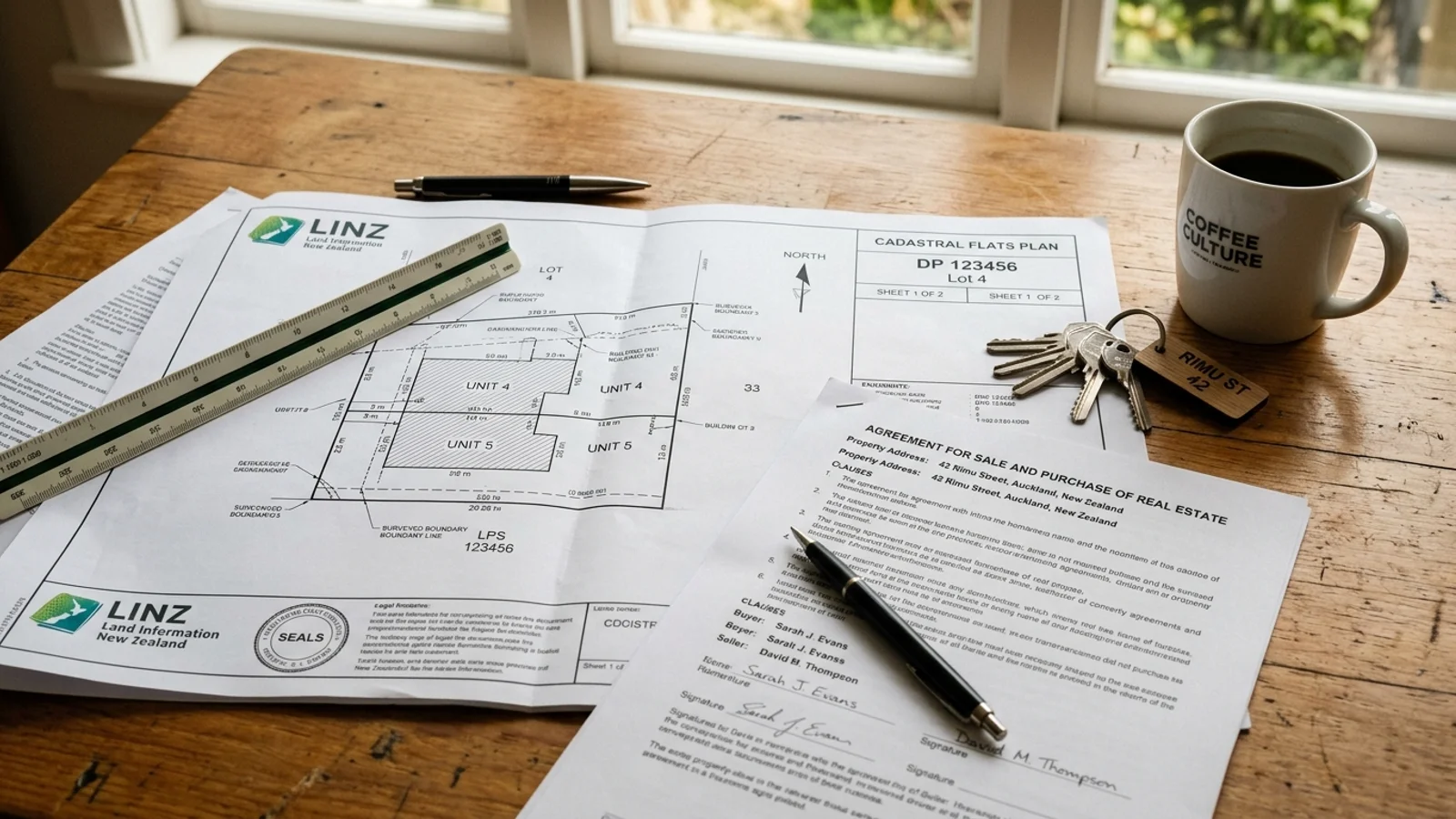
Here are the most common real-world triggers of a defective cross-lease title in New Zealand:
- Enclosed Conservatories: A past owner added a glass sunroom or conservatory off the lounge. It feels like part of the house, but if it is outside the original building outline, the title is defective.
- Converted Garages & Enclosed Carports: An open carport shown on the flats plan was boxed in with walls and roller doors to create a lock-up garage or rumpus room. Because it became an enclosed structure, it alters the leased perimeter.
- Exterior Wall Pushes & Extensions: Expanding a kitchen, adding an ensuite bathroom, or pushing out a bedroom by two metres changes the building footprint.
- Unconsented Decks Built Over Common Property: While low ground-level decks within an exclusive-use yard are usually fine, a high timber deck extending into shared driveway common ground breaches the lease.
- Missing Outbuildings: A garage was demolished, moved to a different corner of the section, or rebuilt twice its original size without updating the surveyed title map.
The Council Consent Myth
The biggest trap buyers fall into: believing that because an extension has a Code Compliance Certificate (CCC) from the local council, the title is legal.
Council building consent and cross-lease property titles are two completely separate legal frameworks. The council only checks that the building complies with the NZ Building Code. The council does not check whether the addition breaches your 999-year cross-lease contract or matches your registered flats plan with LINZ. An addition can be 100% council-consented and simultaneously create an illegal, defective title.
4. How NZ Banks Treat Defective Cross-Lease Mortgages (Declines & Retentions)
When you apply for a home loan, the bank’s conveyancing solicitors inspect the Certificate of Title alongside the registered flats plan.
Banks are in the business of securing mortgage debt against clean, marketable collateral. If a cross-lease title is defective, the lender faces severe legal risks:
Legal Risk
Neighbour Injunctions
Under cross-lease law, a disgruntled co-owner has the legal right to demand unapproved structures be demolished at the owner’s expense.
Insurance Risk
Policy Repudiation
Insurance underwriters may refuse to pay out for fire or storm damage on an unrecorded addition, destroying bank mortgage security.
Resale Risk
Mortgagee Difficulty
If the borrower defaults, the bank cannot easily sell a property with a defective title on the open market without steep price discounts.
This is why retail banks enforce strict policies when a title defect appears during due diligence:
- Outright Loan Decline: The bank’s credit underwriter withdraws unconditional finance approval until the vendor regularises the title.
- Settlement Retention Funds: In rare cases where the bank agrees to settle, the lender’s solicitors will hold back $20,000 to $40,000 of the mortgage loan in an escrow trust account, releasing it only once a surveyor registers an updated flats plan within 6 to 12 months.
- Requiring Full Vendor Rectification: Requiring your solicitor to issue a formal title requisition demanding the vendor pay for and complete a full flats plan survey prior to settlement day.
It’s the classic "we’re gonna need a bigger boat" moment of a home purchase — the house looked mint at the weekend open home, but the title plan arrived and an entire bedroom isn’t on the map. (Yes, even that small aluminum-joinery conservatory from 1996 counts. No, the bank's credit committee will not just "look the other way.")
5. Enclosed Additions vs Unenclosed Decks: What Actually Triggers a Defect?
Not every hammer blow on a cross-lease section creates a defective title. New Zealand case law and Land Information New Zealand (LINZ) guidelines draw a sharp distinction between enclosed structures and open alterations.
Triggers a Defective Title (Flats Plan Update Required)
- Any enclosed living area addition (bedrooms, bathrooms, sunrooms)
- Enclosing a porch, veranda, or portico with glass, timber, or weatherboards
- Converting an open carport into an enclosed garage with walls and doors
- Detached sleepouts, permanent garden studios, or enclosed hobby sheds
- Altering the external perimeter walls of the flat shown on the title plan
Generally Does NOT Trigger a Defective Title
- Internal renovations (new kitchen, bathroom remodels, non-structural interior walls)
- Unenclosed timber decks built at ground level within your exclusive-use area
- Open pergolas, shade sails, or unroofed timber trellises
- Small temporary kitset tool sheds (under 10m² and not permanently fixed)
- Painting exterior cladding or re-roofing with matching materials
The Golden Rule for Cross-Lease Owners: If an alteration adds walls and a roof that creates enclosed internal space beyond the original surveyed footprint, you need an updated flats plan and your neighbour’s signature. If it’s strictly inside your existing four walls, you don’t.
6. How to Fix a Defective Title: Updating the Plan vs Freehold Conversion
If your lawyer or building inspector flags an unrecorded addition on a cross-lease property you own or intend to buy, you have two legal avenues to fix it:
Option A: Regularising the Flats Plan
Standard FixEngage a licensed cadastral surveyor to re-measure the true footprint of all dwellings on the site. A surveyor prepares a new deposited plan, your solicitor drafts a deed of variation to the lease, all cross-lease neighbours sign their consent, and the new plan is registered with LINZ.
Option B: Converting Cross-Lease to Freehold (Fee Simple)
Ultimate SolutionBoth or all cross-lease neighbours agree to permanently dissolve the cross-lease structure through a formal subdivision. Each owner receives an independent Fee Simple (Freehold) title with their own surveyed boundary pegs. This eliminates flats plans, neighbour consent clauses, and defective title worries forever.
If your relationship with the cross-lease neighbour is positive and both parties have equity, converting to freehold is almost always the smartest long-term financial move. It removes the cross-lease stigma and opens up maximum future borrowing and sale potential.
7. What Buyers Must Do Before Going Unconditional (Requisition of Title)
I have seen this pattern repeatedly since founding AML Home Loans in 2017: buyers fall in love with a home, scramble to satisfy their finance condition, and only discover a defective cross-lease title 48 hours before settlement.
Older homes (especially pre-2000s stock) can carry weathertightness issues or unconsented work that don't show up until a valuer or lender's due diligence flags them. Get that checked before you're mid-negotiation, not after you're unconditional.
Real Auckland Case: The 1990s Conservatory That Halted Bank Sign-Off
A young couple purchasing a 2-unit cross-lease home in West Auckland had their main bank finance pre-approved. Three days before their conditional finance date, their conveyancing solicitor cross-referenced the property's Land Information Memorandum (LIM) against the 1983 flats plan and noticed an unrecorded 14m² enclosed sunroom added in 1995. The main bank’s lending desk refused to issue unconditional loan documentation. Kundan stepped in, reviewed the file, and arranged an agreement where the vendor held $25,000 in solicitor trust escrow for an expedited flats plan survey while placing the mortgage with an AML panel lender offering flexible title remediation criteria. Settlement proceeded on time without the buyers losing their contract.
Protect yourself by following these four non-negotiable buyer due diligence steps:
- Compare the Physical Footprint to the Title Plan: Don't just walk through the bedrooms. Take the flats plan from the property pack, walk around the outside of the dwelling, and verify that every exterior wall, garage, and roofline matches the diagram.
- Ensure Your Sale Contract Has a Standard Requisition Clause: Under Clause 5.2 of the standard NZ ADLS/REINZ Agreement for Sale and Purchase, you have 10 working days from signing to "requisition" any defect in title. If the vendor cannot fix the defect, you have the right to cancel the contract.
- Beware of Auction Title Waivers: When bidding at a property auction, you buy unconditionally. Auction terms almost always include a clause where the buyer accepts the title as-is and waives the right of requisition. Never bid on a cross-lease home at auction without your lawyer examining the flats plan beforehand!
- Inspect the Cross-Lease Agreement Terms: Have your solicitor read the original 999-year lease document. Look for historical restrictions on pets, exterior painting colours, vehicle parking in shared driveways, and rules governing common property maintenance.
8. Five Steps to Getting Approved for a Cross-Lease Mortgage with AML
Securing home loan approval on a cross-lease property requires pairing clean financials with proactive title due diligence.
Here is how we guide Kiwi home buyers and investors through cross-lease lending from first phone call to keys in hand:
Pre-Approval
We establish your maximum borrowing capacity across 20 bank and non-bank lenders in 3–5 business days.
Flats Plan Audit
Before you make an offer, we cross-check the property's flats plan against council files to catch discrepancies early.
Contract Clauses
We coordinate with your lawyer to insert robust finance, LIM, and title requisition clauses into your purchase agreement.
Lender Matching
If minor title complexities exist, we place your application with lenders whose credit policies allow escrow retentions.
Loan Settlement
We structure your mortgage into competitive fixed and floating tranches for smooth drawdown on settlement day.
Whether you are a first home buyer looking at an affordable unit, buying an existing property, or seeking step-by-step guidance on how to buy a house in NZ, getting experienced mortgage advice prevents costly delays.
FAQs
Straight Answers: Cross-Lease Property Mortgages in NZ
Will New Zealand banks lend on a cross-lease property?
Yes, all major New Zealand retail banks lend on cross-lease properties provided the title is "clean". This means the physical exterior outline of the dwelling and any enclosed structures exactly match the registered flats plan on the Certificate of Title, and the underlying lease document is standard and unencumbered.
What is a "defective title" on a New Zealand cross-lease property?
A cross-lease title is legally defective when structural changes or enclosed additions have been made to the home without updating the registered flats plan. Examples include adding a conservatory, enclosing a veranda or carport, converting an open garage into living space, or adding an extension that alters the external footprint.
Why do banks care if a cross-lease flats plan is not updated?
Banks view the title as their primary legal security. If the physical building does not match the registered flats plan, other cross-lease co-owners can legally demand the unapproved structure be removed. Furthermore, house insurers may decline claims on unconsented or non-compliant alterations, exposing the bank's mortgage to unacceptable financial risk.
Does building an open deck or a detached garden shed make a cross-lease title defective?
Generally, unenclosed structures like open timber decks at ground level or small temporary garden sheds do not alter the building footprint on a flats plan. However, if a deck encroaches on common property or exceeds height and boundary restrictions, or if a large permanent shed is erected, it can still breach the terms of the underlying 999-year lease.
How much does it cost to fix a defective cross-lease title in NZ?
Updating a flats plan typically costs between $10,000 and $20,000. This includes hiring a licensed cadastral surveyor, obtaining council resource consent, securing written consent from all other cross-lease neighbours, and paying solicitor conveyancing fees to register the new plan with Land Information New Zealand (LINZ).
How much does it cost to convert a cross-lease to a freehold title?
Converting a two-unit cross-lease to fee simple (freehold) titles typically costs $25,000 to $40,000+ in total (often split between the co-owners). The process requires a full subdivision consent, surveyor plans, council infrastructure checks, and legal drafting, but permanently eliminates cross-lease restrictions and usually adds substantial market value.
What is a title requisition under the NZ Sale and Purchase Agreement?
Under the standard ADLS/REINZ Agreement for Sale and Purchase, Clause 5.2 allows a purchaser's solicitor to "requisition" (object to) a defect in title within 10 working days of signing. This legally requires the vendor to fix the defect prior to settlement. If the vendor cannot or will not fix it, the buyer can cancel the contract without penalty.
Looking at a Cross-Lease Property in New Zealand?
Sorted doesn't happen by accident. If the bank's title team is waving red flags at a cross-lease flats plan, book a free consultation with Kundan Singh before your finance clause expires — we will ensure your loan structure is solid and your title is clean.
- Zero upfront fee for initial advice — we are typically remunerated directly by the lender upon settlement
- Access to 20 bank and non-bank lenders on panel (7 major retail banks, 13 specialist non-banks)
- Cross-lease title experience — navigating flats plan retentions, vendor requisitions, and conversions
- Licensed Financial Advice Provider (FSP 714331 / Kundan Singh FSP 512966)
- Rapid response — direct reply within 2 business hours and pre-approvals in 3–5 business days